
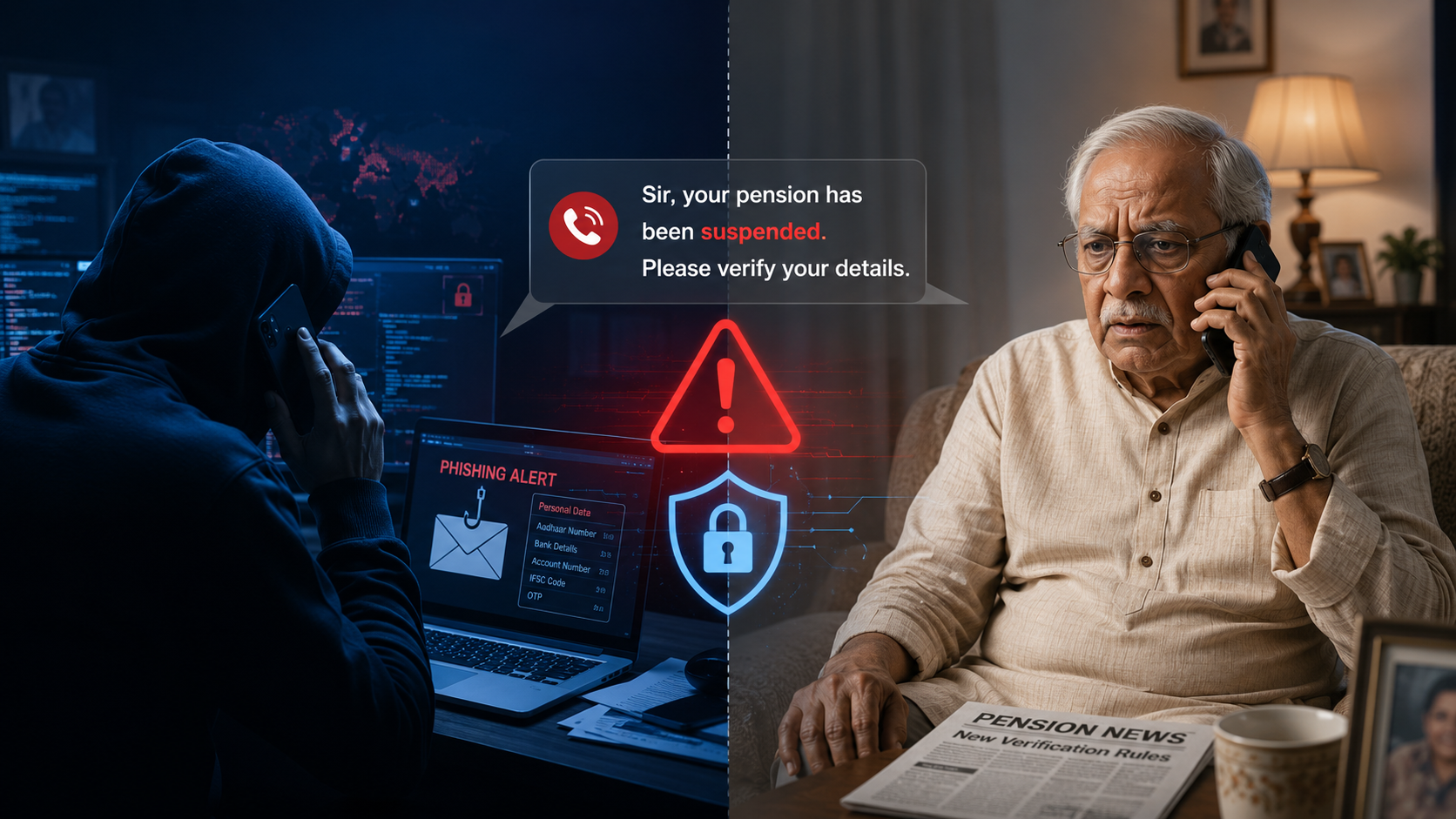
Every day, cybercriminals invent new ways to trick innocent people. Unfortunately, one of their favourite targets is senior citizens.
Older adults often trust phone calls that appear to come from government offices, banks, or pension departments. Hackers exploit this trust to steal personal and financial information.
A Story That Happens Every Day
Imagine this.
Mr. Sharma, a 72-year-old retired government employee, receives a phone call.
The caller speaks confidently.
"Sir, we're calling from the Pension Department. Your pension has been suspended because your verification is pending. If you don't complete the verification within the next 30 minutes, your pension payments will stop."
Hearing this, Mr. Sharma becomes anxious.
After all, his monthly pension is his primary source of income.
The caller continues:
"Don't worry, Sir. We'll help you right now. Please verify your Aadhaar number, bank account details, date of birth, and the OTP that you'll receive."
Feeling frightened and believing he is speaking to a government official, Mr. Sharma shares every detail.
Within minutes, money disappears from his bank account.
The caller's phone is switched off.
Mr. Sharma has become a victim of a phishing attack.
Why Do Hackers Target Senior Citizens?
Hackers know that many elderly people:
- Trust official-looking phone calls.
- May not be familiar with modern cyber scams.
- Feel stressed when they hear words like "Pension Blocked," "Bank Account Frozen," or "Government Verification."
- May not verify the caller's identity before sharing information.
Cybercriminals use fear and urgency to pressure victims into making quick decisions.
Common Tricks Used by Fraudsters
Scammers may claim that:
- Your pension has been suspended.
- Your Aadhaar needs urgent verification.
- Your bank account will be blocked.
- Your KYC has expired.
- Your ATM card has been deactivated.
- You have won a government benefit.
- Your account is linked to suspicious activity.
They may even spoof official phone numbers or pretend to represent government departments.
Never Share These Details
No genuine government office, pension authority, or bank will ask you over the phone for:
- OTP (One-Time Password)
- ATM PIN
- CVV number
- Internet banking password
- Debit or credit card details
- UPI PIN
- Full bank account credentials
If someone asks for any of these, it is almost certainly a scam.
How to Protect Your Parents and Grandparents
The strongest defence against phishing is awareness.
Talk to the elderly members of your family and explain that:
- Government departments do not verify pension details through random phone calls.
- Banks never ask for OTPs or PINs.
- Never trust unknown callers simply because they sound professional.
- Always disconnect the call and contact the official office using the number available on its official website.
- If unsure, ask a trusted family member before sharing any personal information.
A five-minute conversation today could prevent a lifetime of financial loss.
Warning Signs of a Phishing Call
Be cautious if the caller:
- Creates panic or fear.
- Demands immediate action.
- Asks you to keep the conversation secret.
- Requests personal or banking information.
- Asks you to install an app.
- Requests an OTP or UPI PIN.
- Threatens to stop your pension or freeze your account.
These are classic phishing techniques.
If Someone Has Already Shared Information
If you or a family member has shared sensitive information:
- Contact your bank immediately.
- Block affected cards or accounts.
- Change passwords and PINs.
- Report the incident to the local cybercrime authorities.
- Inform family members so they can assist quickly.
The faster you act, the better the chances of preventing financial loss.
Final Thoughts
Hackers are no longer targeting only computers—they are targeting people.
Senior citizens are among the most vulnerable because scammers exploit their trust, fear, and lack of awareness.
The best cybersecurity tool isn't expensive software.
It's education.
Take a few minutes today to talk to your parents, grandparents, neighbours, or any elderly person you know.
That conversation could save their lifetime savings.
Share This Message
Before you end your day, call your parents or grandparents and remind them of one simple rule:
Never share your OTP, bank details, Aadhaar information, or passwords with anyone over the phone—even if they claim to be from the government or your bank.
One conversation can prevent one scam. One awareness campaign can protect thousands of families.