
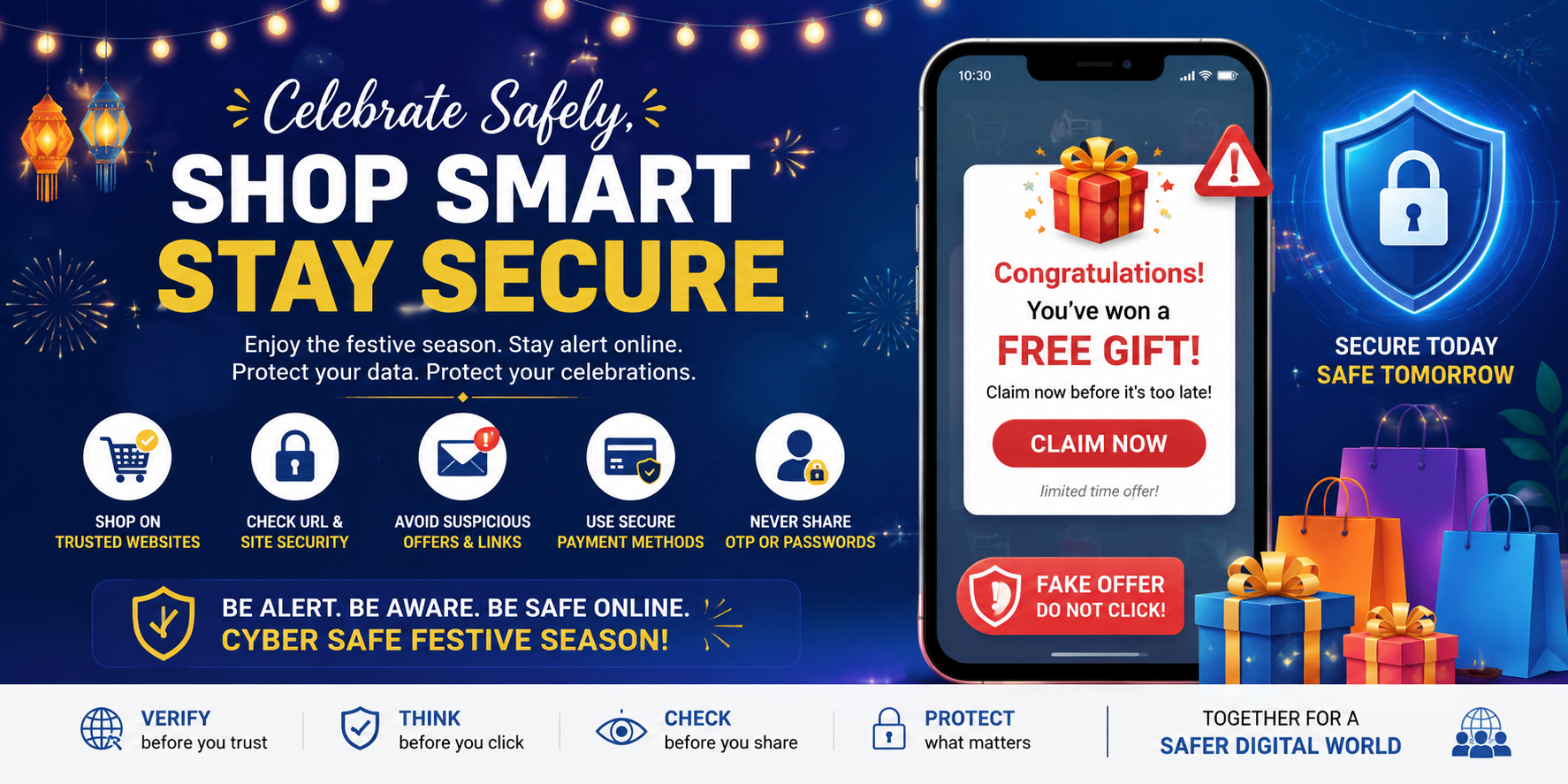
The festive season brings joy, celebrations, and a shopping spree. But while you are busy hunting for the best deals, cybercriminals are equally busy setting up traps!
Imagine receiving a message on WhatsApp or email that reads:
"Grate Festable Offer! Win a free smartphone or get 50% off on top brands!"
As attractive as it sounds, this is a classic Phishing Scam. Let’s dive into what phishing actually is, how to spot these fake offers, and how to keep your hard-earned money safe.
What is Phishing?
Phishing is a cyber attack where scammers impersonate legitimate companies—like Amazon, Flipkart, or major banks—to trick you into sharing sensitive information.
By dangling a "Great Festive Offer" or a "Bumper Lottery Prize", they prompt you to click a malicious link. Once you click and enter your personal details (like passwords, OTPs, or bank information), scammers gain access to your accounts or steal your money.
Red Flags: How to Spot a Fake Festive Offer
Scammers often leave behind subtle clues. Look out for these common warning signs:
- Spelling and Grammar Errors: Fraudulent messages frequently contain glaring mistakes. For example, writing "Grate Festable Offer" instead of "Great Festive Offer", or using fake domain names like "Amaazon".
- Suspicious Links (URLs): Legitimate businesses use official domains. Be wary of shortened or odd links like
[http://bit.ly/festive-free-gift](http://bit.ly/festive-free-gift)orwww.flipkart-offers-free.xyz. - Too-Good-To-Be-True Deals: Offers claiming you can get a $1,000 phone for $10, or instantly win a massive cash reward without entering an official contest, are almost always fake.
- Artificial Urgency: Messages that say "Offer expires in 5 minutes! Act now!" are designed to panic you into acting without thinking critically.
How to Protect Yourself from Cyber Frauds
Golden Rule: Legitimate companies will never ask you for confidential credentials, PINs, or OTPs via random WhatsApp messages or unverified links.
- Don't Click Unverified Links: Avoid clicking on links received from unknown senders or forwarded messages.
- Verify Directly: If you see an incredible offer, open your browser and manually visit the official website or app of that brand to verify if the offer exists.
- Never Share Confidential Info: Keep your OTPs, UPI PINs, passwords, and CVVs strictly to yourself.
- Stop the Chain: Do not forward suspicious offer messages to your friends or family groups.
What to Do If You Fall Victim to a Scam
If you accidentally clicked a suspicious link or lost money to a fraudster:
- Contact Your Bank Immediately: Call your bank’s official helpline to block your credit/debit cards and disable net banking.
- Report to Cyber Crime Authorities: File an official complaint on your local cybercrime portal (e.g., in India, call 1930 or report at cybercrime.gov.in).
- Change Passwords: Immediately update passwords and PINs for all your banking apps and email accounts.